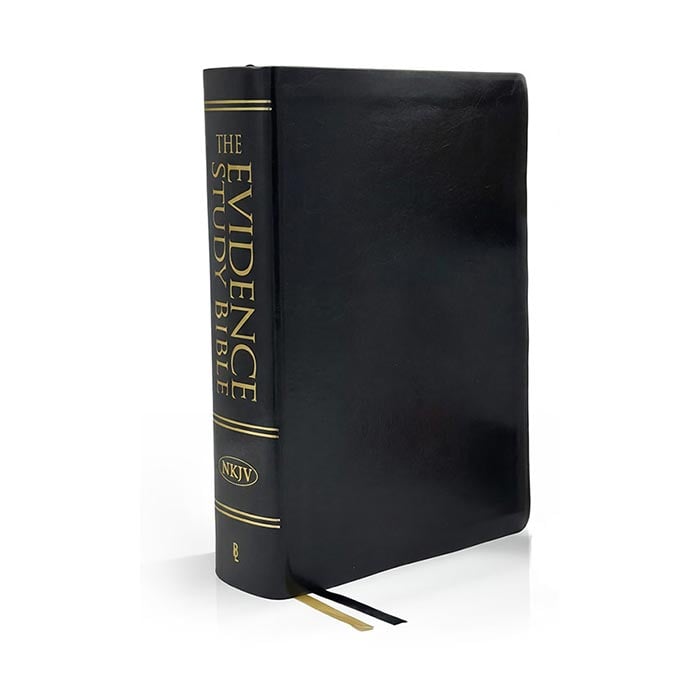







Adapted from Compelled (which contains more than 100 photographs).
I’m honored to write and speak for a living—which is wonderfully ironic, because I once detested both, and for good reason.
Although I was in the top stream at school, I failed miserably in high school English. Nothing I wrote seemed to flow. Then, under duress, I had to speak in front of my class. I thoroughly humiliated myself when my mind suddenly went vacuum-blank.
So the fact that I have spent my entire adult life writing and speaking still leaves me shaking my head in disbelief.
“I’m honored to write and speak for a living—which is wonderfully ironic, because I once detested both, and for good reason.”
But then I remember what changed everything: I found everlasting life. With it, I discovered a passion that fueled an exciting adventure.
The publishers of my new autobiography, Compelled, knew there was much more to the story, so they squeezed me like an orange. They asked question after question about my childhood, and their persistence paid off. They resurrected memories I didn’t even know I had.
One of those memories involves a principal at my primary school who had a profound influence on me. He spoke to our class for only a few minutes, but I have never forgotten what he did.
Our English class was packed with about fifty children, yet I felt as though he were speaking directly to me.
Here is the story, quoted from Compelled:
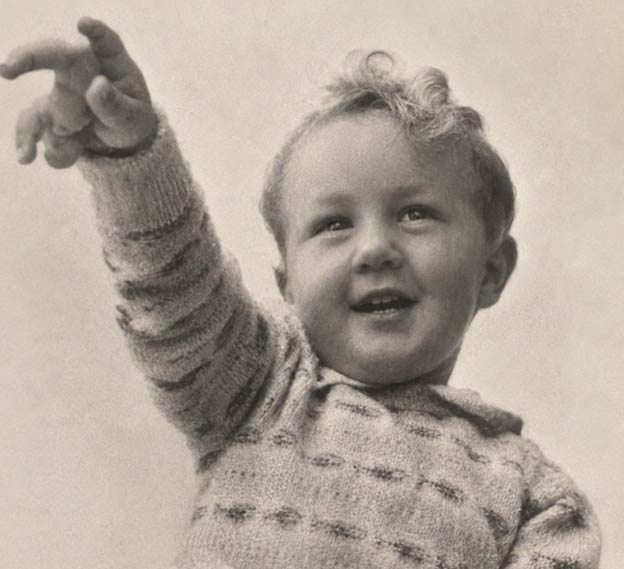
In New Zealand, primary school began at the age of five years old. Each classroom had a chalkboard, wooden desks with inkwells, and a teacher who usually had eyes in the back of his or her head. We spent our days learning to read and write, figuring out arithmetic, drinking a government-provided container of milk daily, and playing tons of sports.
We used fountain pens in those days—the type where you reach in and dab the ink out of the inkwell. It was common to hear the teacher ask, “Who’s flicking ink?” She didn’t really need to ask—there was always a splattered trail leading right back to the guilty party. This repeated mischievous act revealed the sinful nature we had even in our young school years, and it rarely went unpunished.
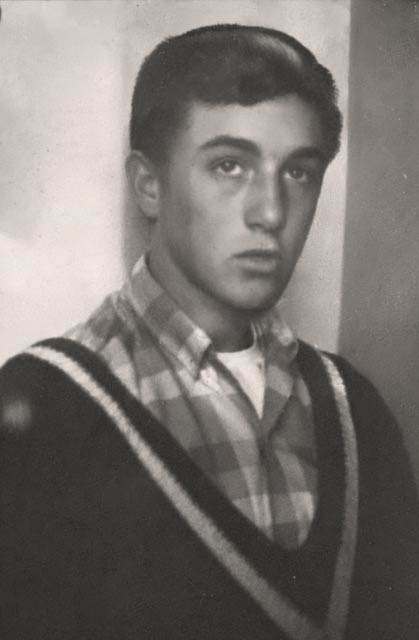
In those days, teachers were encouraged to administer corporal punishment. This came in the form of a strap across the palm of the hand. It was very painful, and my personal record over the course of one year was a mere 13 straps. Each student would carve little notches on his or her wooden desk to indicate how many straps he or she had that year. My friend, John Stocker, had just under 100 straps in one year. John had the habit of pulling his hand away as the teacher brought down the strap, sending the class into fits of laughter.
One time, I found half a bead inside one of the old wooden desks. Naturally, I slipped it into the outer part of my ear. When I reached to take it out, it slipped in deeper. I tried again and only pushed it in even further. So I did the sensible thing: I told the teacher, who sent me straight to the doctor. He came at me with long tweezers and managed to pull out half a bead—but he wasn’t convinced that was the whole story. He looked concerned and said, “I think the other half’s still in there.” Thankfully, he was wrong.
Another memory that has stayed with me forever is seeing a young girl fall through a window at school. Her wrist was badly cut and squirted blood upwards like a geyser—about 15 inches (38 cm) into the air. Fortunately, a teacher quickly stopped the bleeding, no doubt saving her life. I empathize with those in Acts 20:7–11 who watched Eutychus fall out the window and die as they listened to Paul preach. Still, it must’ve been quite an unforgettable memory for them to also watch Paul, by the power of God, bring him back to life!
One impactful school day, the principal, Mr. Hull, came to speak to our class. That didn’t happen very often. He had a rather round body and looked like one of those colorful characters from a Charles Dickens novel. We called him Bullfrog, but never within earshot. He came to our class to teach us how to read in public. He began by reading a paragraph from a book, as most people do. Then he changed gears and read it again, emphasizing particular words. I was enthralled by his narration. It was as if something magical happened within me as each word took on life in my little mind. I leaned in to hear him softly say the word “whisper,” then jolted back as he blasted the word “THUNDER!” It was marvelous. He was only in our class for a few minutes, but oh, how I would love to go back in time, apologize for calling him Bullfrog behind his back, and give him a tear-filled hug for his lesson on public speaking. It taught me something more important than anything else I learned at that school, and I would eventually live out Mr. Hull’s example of the power of the spoken word.
Adapted from Compelled (which contains more than 100 photographs).