




Writing a book can feel daunting. It’s a little like childbirth. An idea is conceived, followed by the inevitable morning sickness, when you wonder whether you can carry on. Finally, after all the labor pains, the day arrives when you hold that baby in your arms.
Daunting though it may seem, modern technology has made writing a book considerably easier. Many years ago, when I had an idea, I would sit down at a typewriter. If I made a mistake, I had to interrupt my train of thought, apply correction fluid, wait for it to dry, and then continue typing. If I wanted to rewrite or improve a portion of the book, it was even more difficult.
I still remember the first time I saw a word processor. I could hardly believe my eyes. We take such things for granted today, but I almost exploded with joy when I realized that if I made a mistake, I could simply make it disappear from the screen. Then I could replace it with the correct word—without correction fluid. It seemed magical, and I was enthralled.
Another enormous leap forward was the Internet. Before its arrival, research meant driving to a library, finding a book on the subject, photocopying the relevant pages, taking them home, and then manually typing the information into my manuscript. Today, I can do the same research and find what I need at lightning speed. Modern technology is wonderful.
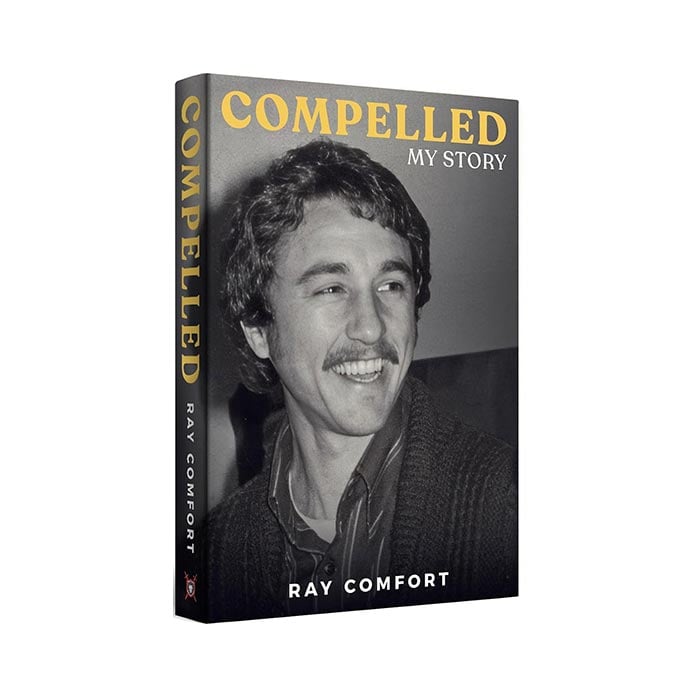
“I hope those who read Compelled will find as much pleasure in reading it as I did in writing it.”
But for me, the biggest breakthrough in writing has been being able to dictate my thoughts. Instead of physically typing, I tap the microphone and talk to my iPad. At that stage, I don’t worry about spelling or poorly constructed sentences. What matters is simply getting my thoughts into written form.
Once I have about five hundred words, I go over them with the objectivity of a surgeon wielding a scalpel. No matter how much I like a sentence, I cut it if it doesn’t flow or serve the story.
That is why what might once have been the daunting task of writing an autobiography like Compelled took me only a few months.
The process slowed, however, when the publishers became directly involved in editing. They read the manuscript and returned with requests for substantial changes—particularly to the chronology. Then they squeezed me like an orange until forgotten details from my early life found their way into the manuscript.
Editing can sometimes be painful. Editors also wield the scalpel, often wanting to remove material I consider important. But I kept reminding myself that they are experts in their field and that their goal is the same as mine: to produce the best possible book.
Now that the baby is finally in my arms, all the pain has been forgotten. What they did was outstanding. I hope those who read Compelled will find as much pleasure in reading it as I did in writing it.